The Antipodeans and the Clash of ’59
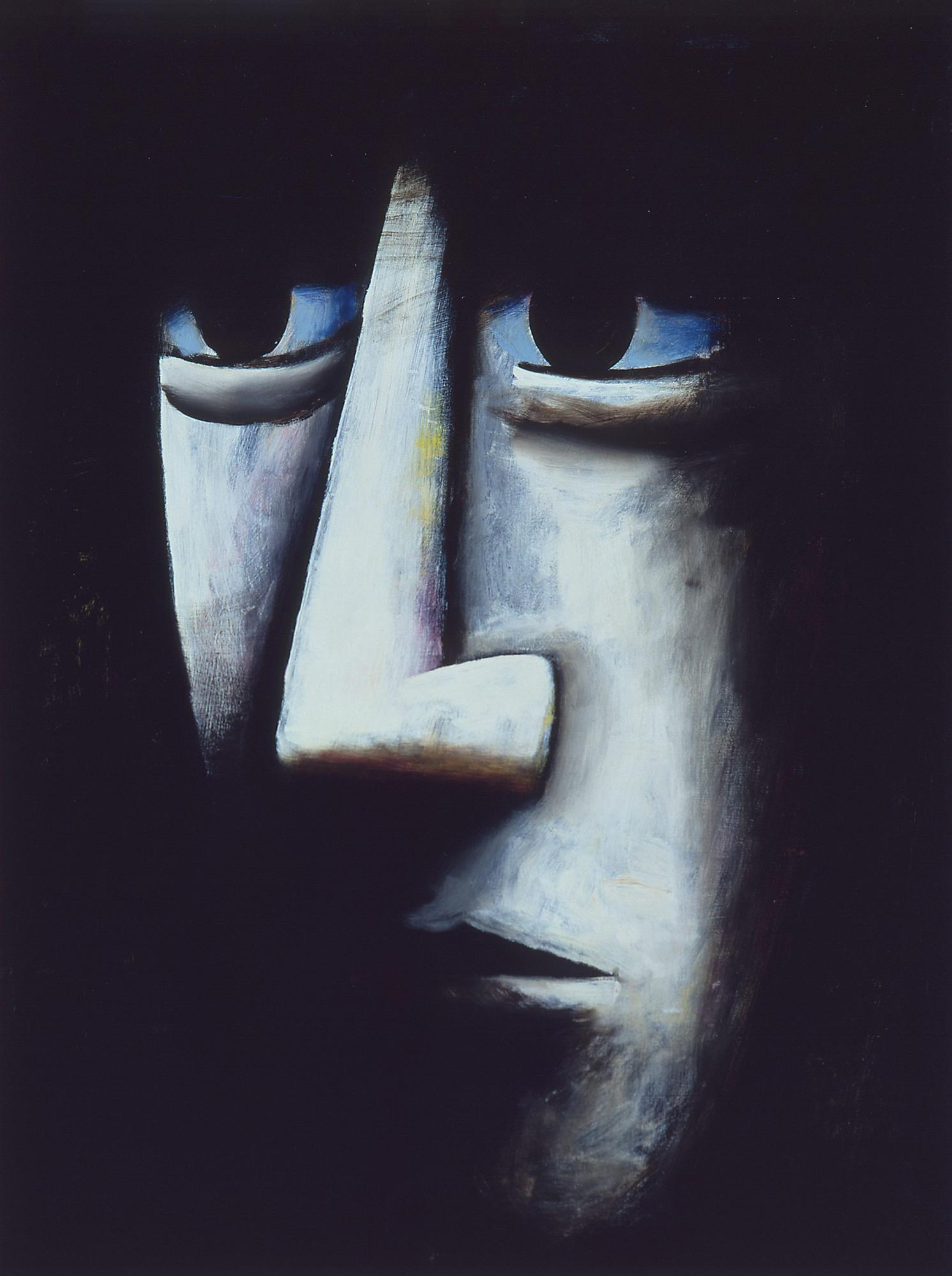
Charles Blackman, Face 1959, oil on composition board, 121.5 x 91.5 cm, Heide Museum of Modern Art, gift of the Trustees of the Museum of Modern Art and Design of Australia, to the National Gallery of Victoria 1981, transferred to Heide Museum of Modern Art by the Council of Trustees of the National Gallery of Victoria 2005
Throughout the 1940s and 50s, Australian art witnessed a clash of ideals between proponents of figuration and abstraction. The conflict peaked in 1959–61 when a series of exhibitions by the Melbourne-based ‘Antipodeans’ and the ‘Sydney 9’ presented the case for either side.
In February 1959 seven Melbourne-based artists formed a collective with the art historian and critic Bernard Smith to promote the central role of figuration in Australian contemporary art—a concept which in their view urgently needed to be defended. Their only group exhibition, held at the Victorian Artists Society that August, was accompanied by Smith’s ‘Antipodean Manifesto’, which positioned figurative painting as vital to national narratives and mythmaking. The Sydney 9 group was founded in 1960 in direct opposition to the Antipodeans and held exhibitions in both cities, recruiting the young art critic Robert Hughes to write for them and provocatively arriving in Melbourne by helicopter for the opening of their 1961 show.
Featuring a recreation of the Antipodeans’ only group exhibition and reuniting key paintings by the Sydney 9, this exhibition re-examines a defining episode in Australian modernism shaped by tensions between representational and nonrepresentational art, regional identity and the global avant-garde.
The artists include: Charles Blackman, Arthur Boyd, David Boyd, John Brack, Robert Dickerson, John Perceval and Clifton Pugh (The Antipodeans) and Hector Gilliland, Leonard Hessing, Clement Meadmore, John Olsen, Carl Plate, Stanislaus Rapotec, William Rose, Eric Smith and Peter Upward (the Sydney 9).
Included with museum admission